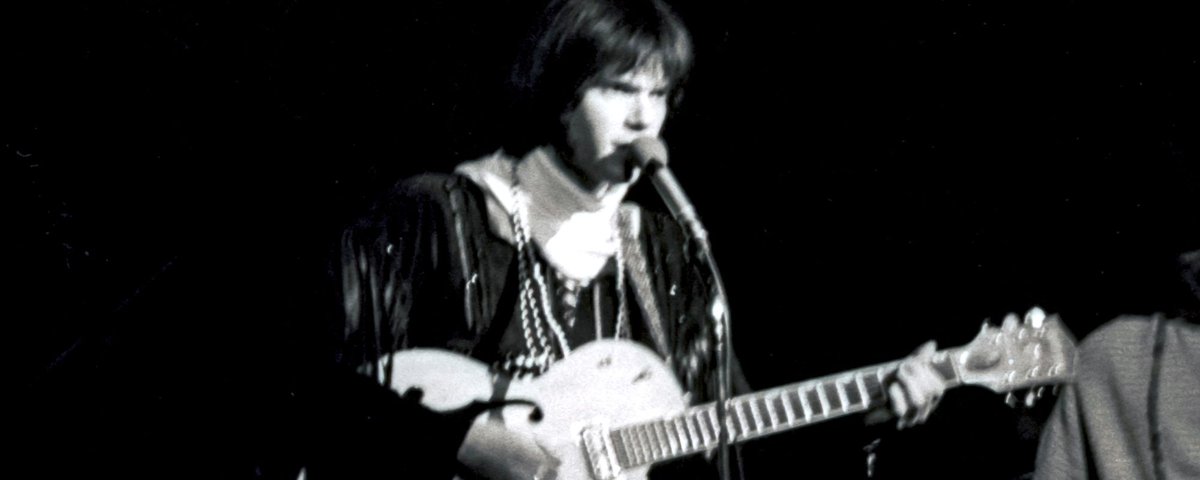
Buffalo Springfield's "For What It's Worth" Captured a Changing Era
It starts with a whisper, then a thrumming bassline, and a guitar riff that feels both urgent and timeless. "Stop, hey, what's that sound? Everybody look what's going down." Instantly recognizable, eternally relevant, "For What It's Worth" is far more than just a famous song. It's an indelible snapshot of a turbulent generation, and the story behind it, starring Buffalo Springfield: The Band Behind "For What It's Worth", is a masterclass in how a local incident can spark a universal anthem.
While often synonymous with the broader anti-war movement, this iconic track was born from a specific, localized skirmish on the streets of Los Angeles. Yet, its poetic lyrics and evocative melody transcended its origins, capturing the simmering unrest of an entire era. To understand the song is to understand the band that birthed it, a short-lived but supremely influential collective whose members would go on to define generations of rock music.
At a Glance: "For What It's Worth" & Buffalo Springfield
- The Anthem: "For What It's Worth," often called the "Stop! Hey What's That Sound" song.
- The Author: Written by Stephen Stills in roughly 15 minutes.
- The Inspiration: The Los Angeles Curfew Riots of November 1966, specifically skirmishes between youth and police over anti-loitering laws on the Sunset Strip and the closure of the Pandora's Box nightclub.
- The Band: Buffalo Springfield, an early pioneer in combining rock, folk, and country elements. Its members included Stephen Stills, Neil Young, Richie Furay, Bruce Palmer, and Dewey Martin.
- The Release: Single released December 1966, hitting #7 on both Billboard Hot 100 and Cash Box Top 100 in early 1967.
- The Impact: Though locally inspired, its universal themes made it an anthem for general social unrest in the 1960s and it remains a protest staple today.
- The Legacy: Paved the way for future supergroups like Crosby, Stills & Nash (and Young).
- The Producer Twist: The song was recorded by the band themselves, without their usual producers, allowing for a more authentic, united sound.
The Sound That Stopped a Nation (and the Sunset Strip)
Imagine Los Angeles in November 1966. The counterculture was burgeoning, but societal norms were pushing back. Young people, drawn to the Sunset Strip's vibrant music scene, were clashing with authorities over anti-loitering laws and a new, stricter curfew. A popular nightclub, Pandora's Box, a beloved hangout, was slated for demolition, fueling resentment. When police cracked down, deploying in what was described as a "Macedonian battle array" against approximately 3,000 young protestors, the tension reached a boiling point.
It was against this backdrop that Stephen Stills, witnessing the skirmishes firsthand, penned "For What It's Worth." The creative spark was so intense, the words and melody poured out in an astonishing 15 minutes. The rapid fire of the lyrics – a blend of observation, confusion, and a burgeoning sense of unease – perfectly mirrored the chaos and uncertainty of the moment. He wasn't overtly taking a side, but rather capturing the palpable tension: "There's battle lines being drawn / Nobody's right if everybody's wrong."
Released as a single in December 1966, "For What It's Worth" quickly ascended the charts, reaching a respectable #7 on both the Billboard Hot 100 and Cash Box Top 100 charts in early 1967. Its success was immediate, but its longevity proved to be legendary. While the song was directly inspired by the Sunset Strip protests of 1966, its lyrics resonated far beyond Los Angeles. It became an anthem for general social unrest across the country, a soundtrack to a generation questioning authority and seeking change. Decades later, its message remains potent, still played at protest rallies and cited as a touchstone for social commentary.
Interestingly, this seminal track wasn't originally included on Buffalo Springfield's debut album. Its immense popularity, however, led to its inclusion on subsequent re-issues, replacing the track "Baby Don't Scold Me." This move cemented its place not just as a standalone hit, but as an integral part of the band's initial artistic statement.
Beyond the Anthem: Who Was Buffalo Springfield?
Before "For What It's Worth" catapulted them into the national spotlight, Buffalo Springfield was a fascinating blend of burgeoning talent and diverse musical backgrounds. Formed in Los Angeles in 1966, the band quickly distinguished itself by being among the earliest groups to masterfully combine rock, folk, and country elements into a distinctive, cohesive sound. This genre-bending approach was groundbreaking at a time when musical lines were often more rigidly drawn.
The classic lineup behind "For What It's Worth" comprised five formidable musicians:
- Stephen Stills: Guitars, vocals, and the prodigious songwriter behind their biggest hit.
- Neil Young: Guitars, vocals, and a burgeoning compositional genius whose unique vision would shape rock for decades.
- Richie Furay: Guitars, vocals, providing a crucial country-rock sensibility.
- Bruce Palmer: Bass, known for his unique, flowing style that anchored the band's diverse sound.
- Dewey Martin: Drums, the rhythmic powerhouse holding it all together.
What's truly remarkable about the recording of "For What It's Worth" is how it was made. Prior to this track, the band's producers, Charles Greene and Brian Stone, often favored recording individual musicians separately. While this technique can offer control, it sometimes resulted in a somewhat "tinny sound," lacking the organic interplay of a live performance. For "For What It's Worth," however, Buffalo Springfield bypassed their usual producers and recorded the track themselves. This decision proved pivotal; it was the first time their united performance, their collective energy and synergy, was truly captured on tape. The result was a track brimming with raw authenticity, a sound that felt immediate and human, perfectly fitting its message. This moment marked a turning point, allowing the true essence of their musical collaboration to shine through, a crucial step in Neil Young's time with Buffalo Springfield and the band's overall artistic development.
A Meeting of Musical Minds: The Road to Superstardom
The magic of Buffalo Springfield lay not just in their genre-blending sound, but in the sheer amount of talent crammed into one group. Stills and Young were already prodigious songwriters and instrumentalists, each bringing a distinct voice and vision. Furay added a warm, country-infused harmony and songwriting contributions, while Palmer and Martin laid down an incredibly solid and inventive rhythmic foundation.
Despite their undeniable chemistry and hit-making ability, Buffalo Springfield's tenure was notoriously brief and tumultuous. Internal struggles, creative differences, and issues with legal constraints often plagued the band. They were a comet across the musical sky, burning brightly but briefly, leaving behind a profound impact.
Yet, from the ashes of Buffalo Springfield rose phoenixes that would soar even higher. The band served as a critical incubator for future rock legends. Most notably, Stephen Stills would go on to form Crosby, Stills & Nash, a vocal harmony supergroup that defined the sound of the late 60s and early 70s. The trio became a quartet when Neil Young later joined, creating the iconic Crosby, Stills, Nash & Young (CSNY). This subsequent collaboration, rooted in the shared experience of Buffalo Springfield, cemented their place in rock history and highlighted the extraordinary individual talents that had once coalesced in that singular band. Understanding the formation of Crosby, Stills, Nash & Young is impossible without acknowledging the groundbreaking, if sometimes turbulent, foundation laid by Buffalo Springfield.
Richie Furay, too, continued to make significant contributions to the country-rock genre, co-founding Poco and the Souther-Hillman-Furay Band. The legacy of Buffalo Springfield, therefore, extends far beyond their own discography, shaping the very landscape of American music for decades to come.
"Not a Protest Group": Stephen Stills' Perspective
While "For What It's Worth" undeniably became an anthem for social change and protest, Stephen Stills himself harbored a nuanced view of the song and his band's identity. He famously stated that he did not want Buffalo Springfield to be labeled a "protest group," going so far as to call it a "cop-out."
This perspective might seem contradictory to those who see the song as the quintessential protest track. However, Stills' intent wasn't necessarily to galvanize a movement, but rather to serve as an observer, a reporter of the tension and confusion he witnessed. His lyrics, "There's something happening here / What it is ain't exactly clear," perfectly encapsulate this observational stance. He wasn't shouting slogans; he was articulating a collective sense of bewilderment and unease.
By eschewing the "protest group" label, Stills was perhaps aiming for a broader artistic truth, one that transcended specific political agendas. He wanted the music to speak for itself, to reflect the times rather than preach to them. This distinction is crucial. While the song undeniably resonated with protestors and became a symbol of their cause, its power lies in its universality – its ability to articulate a feeling of societal friction that can manifest in many different ways, in many different eras. It's a testament to the song's depth that it could be born from a specific riot and yet remain relevant to countless other struggles for justice and understanding.
The Echoes Continue: "For What It's Worth" in Popular Culture
A true testament to its enduring power, "For What It's Worth" has woven itself into the fabric of popular culture, finding new audiences and fresh interpretations across decades. Its iconic melody and evocative lyrics have made it a go-to choice for filmmakers, musicians, and artists looking to capture a moment of societal reflection or unrest.
One of the most notable modern uses came in 1998 when hip-hop legends Public Enemy sampled the track for their song "He Got Game," the title track for Spike Lee's film of the same name. This collaboration was particularly poignant as it featured Stephen Stills himself performing new guitar parts, bridging generations and genres in a powerful statement about enduring social issues. The sample introduced the song to a whole new demographic, proving its timeless appeal.
Beyond hip-hop, "For What It's Worth" has made impactful appearances in cinema, helping to set the tone for crucial scenes. It features prominently in the 2005 film "Lord Of War," starring Nicolas Cage, underscoring themes of conflict and moral ambiguity. It also appears in the beloved 1994 classic "Forrest Gump," adding a layer of period authenticity and emotional weight to a film steeped in American history.
The song's cultural footprint also extends to cover versions by a diverse range of artists. Heavy metal icon Ozzy Osbourne offered his unique take, lending a darker, more brooding intensity to the track. Progressive metal band Queensryche also delivered a powerful rendition, showcasing the song's adaptability across different musical styles. These covers highlight the song's robust composition, capable of withstanding varied interpretations while retaining its core message.
It's also worth a quick clarification: while incredibly well-known, this song is distinct from another track also titled "For What It's Worth" found on Stevie Nicks' 2011 album "In Your Dreams." The Buffalo Springfield classic stands alone as a singular moment in music history. For a deeper dive into the exact phrasing that made this song so impactful, you can explore the full What Its Worth Buffalo Springfield lyrics and discover the poetic power of Stills' writing.
Understanding the Enduring Relevance
Why does "For What It's Worth" continue to resonate so profoundly, decades after its creation? The answer lies in its masterful blend of specific origin and universal truth. While born from the Sunset Strip riots, Stills' lyrics never explicitly mention the location, the police, or even the youth involved. Instead, he painted a broader picture of confusion, division, and the urgent need for observation.
"There's something happening here / What it is ain't exactly clear." This opening line encapsulates a feeling that transcends any single conflict. It speaks to the discomfort of living through moments of rapid social or political change, where the lines are blurry, and the truth feels elusive. It encourages listeners to pause, to look around, and to question what they see, rather than passively accept it.
The lines about "battle lines being drawn" and "nobody's right if everybody's wrong" are equally timeless. They speak to the inherent tragedy of conflict and the futility of division, offering a plea for understanding even amidst disagreement. This perspective prevents the song from becoming dated; it's not tied to a particular ideology but to the human condition itself, making it perpetually relevant wherever groups clash and voices demand to be heard.
In an increasingly complex world, the song's call for vigilance and critical thinking remains as vital as ever. It's a reminder that sometimes, the most powerful statement isn't a rallying cry, but an honest, almost bewildered, observation of what's unfolding around us.
Your Next Deep Dive into Music History
The story of Buffalo Springfield and "For What It's Worth" is a microcosm of the turbulent 1960s, a testament to how music can spontaneously capture the spirit of an age. It highlights the raw talent of individual artists who would go on to shape rock 'n' roll, and the profound, sometimes accidental, impact a song can have.
If you've been moved by the narrative behind this iconic track, consider exploring the broader discography of Buffalo Springfield. Their two other studio albums, Buffalo Springfield Again and Last Time Around, showcase the evolving artistry of Stills, Young, and Furay, and are essential listening for anyone interested in the foundational sounds of folk-rock and country-rock. Delving into the early works of Crosby, Stills & Nash, and Neil Young's solo career, will also provide rich insights into how these talents matured beyond their collective beginnings. There’s a whole world of groundbreaking music waiting to be discovered, all rooted in the band that gave us "For What It's Worth."